Is Tracking Word Count in First Drafts Really Useful?

Once again I find myself on deadline through the end of the year, so if I been a little quiet lately, that’s the reason! On deck is the final draft of a book due at the end of the January. While the official announcement hasn’t been made yet, I can say it’s been very fun to write since it’s contemporary. Look for it in Fall 2026.

While I love getting deep into a new book, sometimes the biggest hurdle is the act of writing itself. When you have to write a first draft, word count is your only true measure. But I often wondered how good of a measure is it?

Filler words and placeholder text often take up space.

When I’m drafting I’m flip between plotter and pantser. Which is to say I have an outline but I’m vague on the beats of the interior of a scene (and sometimes forget the outline entirely!). When I working on the first draft I’m trying to figure how things will play out. I shamelessly have brackets filled with text saying [here’s my plan to flesh out this scene on my next pass] with the hopes I’ll have a better idea later. Some scenes are even ones I plan to fix later due to additional research.

Misspellings and grammar riddle the work for now.

I’m in the school of “edit after everything is done”. I find if I edit a recently finished chapter while in the middle of drafting, I end reworking not just that chapter or others too. I might even get stuck for an hour with a prickly paragraph that’s not quite sweetly singing yet. It’s procrastination of a different sort I find. Because for me that first draft is about getting everything out, but sometimes I wonder if a number of misspellings and bad grammar I let fester really reflect the true word count? Or A word is still a word even if misspelled.

The first draft is sparse and missing scenes because you can always add more later.

Often when I get to the very end of my first draft, the final chapter is a skeleton outline of how I want the final beats to go. Call it burnout, call it a process, call it the plight of a writer who writes sequentially. I view first drafts as a fleshed out outline, where my writing is really brainstorming the entire book. I spend most of my writing time revising and editing as I tweak scenes and punch up sentences. But keeping things sparse does impact what the final word count will be, and could be troublesome when I have to hit a certain word court for a project. Although by now I’ve learned to build in that to my draft. For example If I need a project to hit 90K when completed, the first draft will land around 70K, and that usually helps.

Tracking words is about productivity and not the content.

Counting words is quantifiable and easily tracked. It’s easy for anyone to jot down a number in notebook or even put in a tracker. But it can’t measure how well a scene is going. Or if you just quickly pushed out 300 words to meet your quota for the day, just so you can delete the words the following day what did those words really mean? While I don’t think there’s good or bad words at this stage of draft, I think it’s beneficial to be mindful so you’re not writing words solely to fill up space. It’ll make editing those same words all the more easier down the line.

At the end of the day, the number of words simply says what you have got written down. Celebrate that!

Sometimes tracking words gives you an idea of how big a story can get. It is a good way to measure and stay accountable especially when you have a deadline to meet. Keeping an eye on your word count is a good goal setting practice and can help break up a project into less intimidating pieces.

But I find at a certain point tracking words is hardly helpful. When I get to the end of the first draft, I find myself no longer tracking words. I’m just getting out the rest of the words I  have left for the remaining scenes and moments. This is the part I can’t measure because I don’t truly know what that numbers of words are. I just write and keeping writing until the words are gone.

Then I take a breather and start editing right from the beginning.


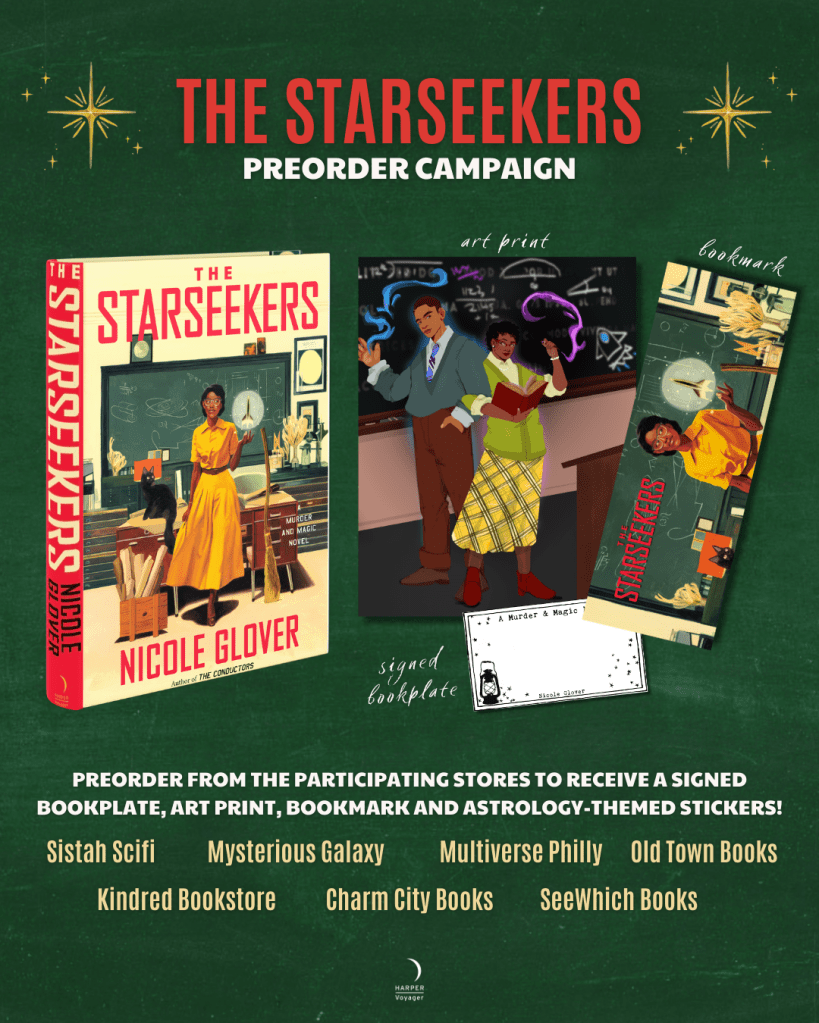
Announcing The Starseekers Preorder Campaign!

Preorder The Starseekers from any of the following bookstores to get some swag and a few surprises!


Upcoming Events


Celebrate The Starseekers with the following events!

Kindred Bookshop

Jan 6, 7pm ET

Virtual


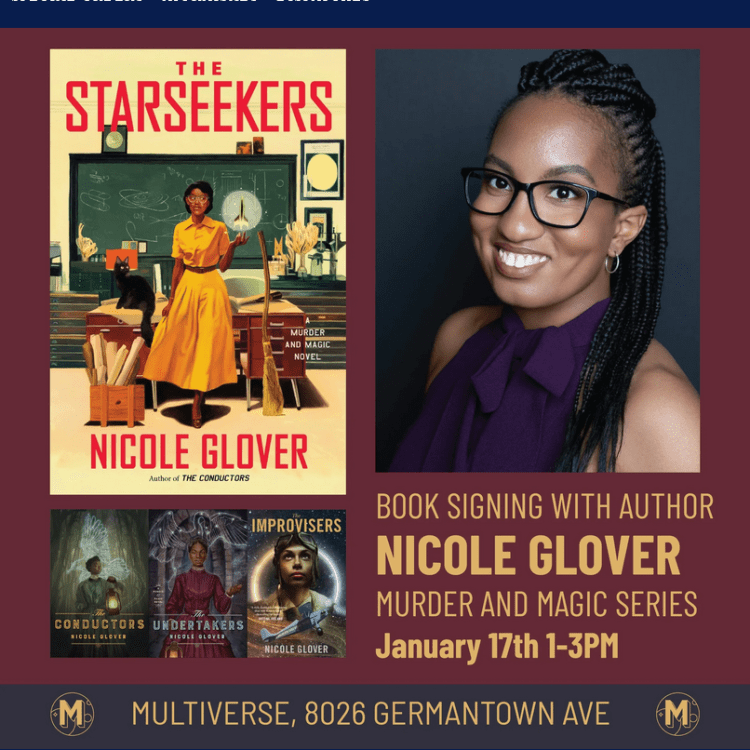
Multiverse Philly

Jan 17, 1pm – 3pm

Philadelphia, PA

More to Come!


The Starseekers

Head to the 1960s for a Hidden Figures meets Indiana Jones historical fantasy. Cynthia Rhodes is a arcane engineer at NASA, who also co-hosts a magical education show with archaeologist Theo Danner. A series of strange accidents at NASA, and elsewhere, put them on the trail of a mystery that entangles them in both peril and murder most foul.

Arriving 1/6/26

Harper Voyager * Barnes & Noble * Bookshop

Amazon * Kobo

Snag an early review copy on Netgalley!

Don’t forget to request at your local library!

Subscribe

Go back

Thank you for subscribing!

Fantastic! You are now subscribed to Nicole Glover’s newsletter, Writing With Starlight and will receive an email notification when a new post is published.
Warning
Warning
Warning.

Nicole Glover is a fantasy writer and the author the Murder and Magic series which includes THE IMPROVISERS. Her next book is THE STARSEEKERS, forthcoming 1/6/26
The Starseekers Cover is Here!

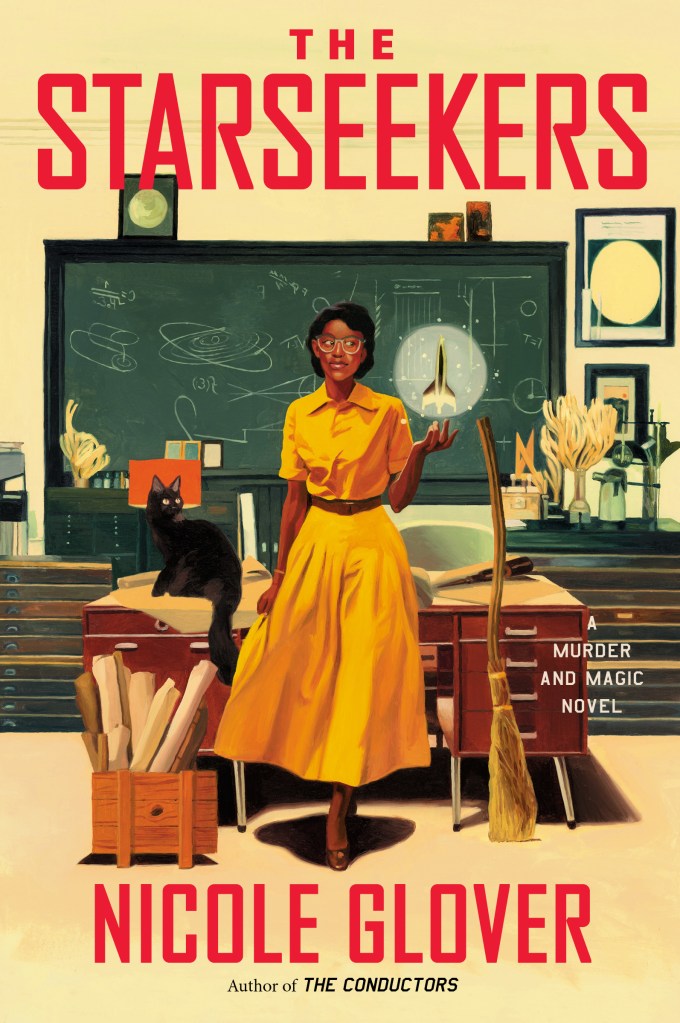
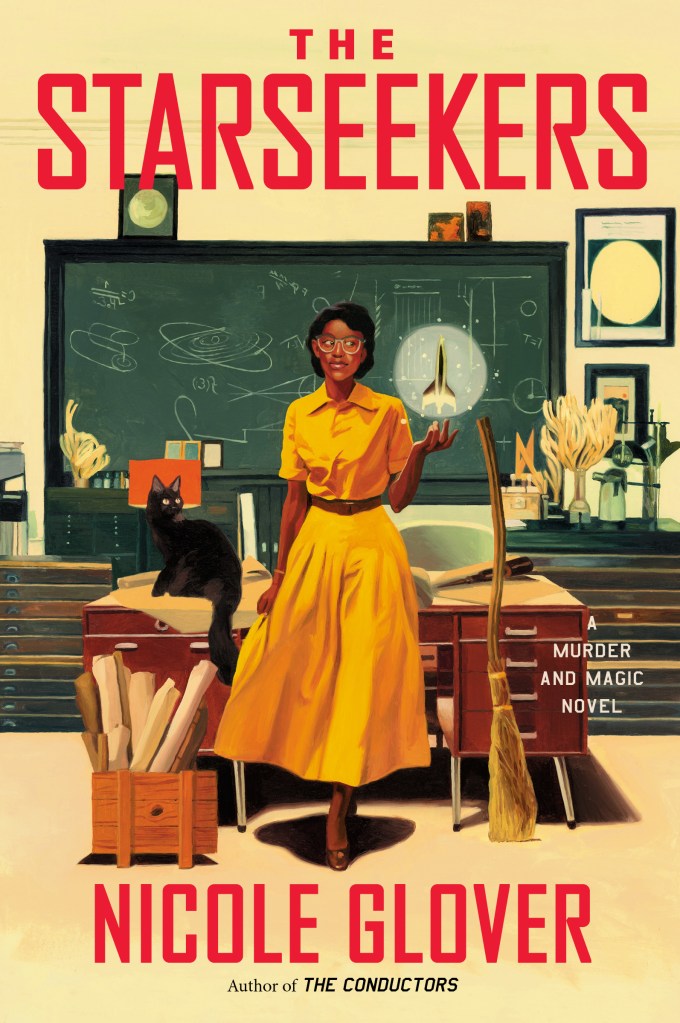
I’m excited to share the cover for The Starseekers! Available now for pre-order.

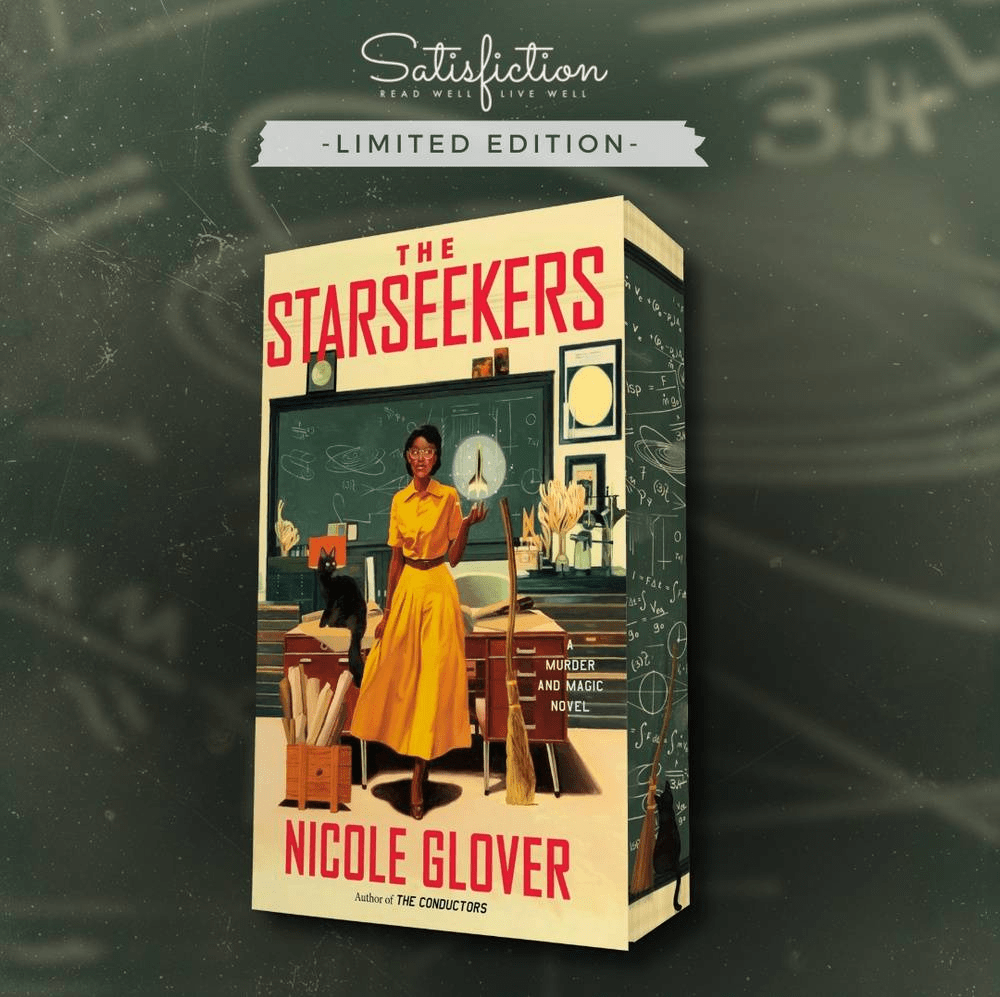
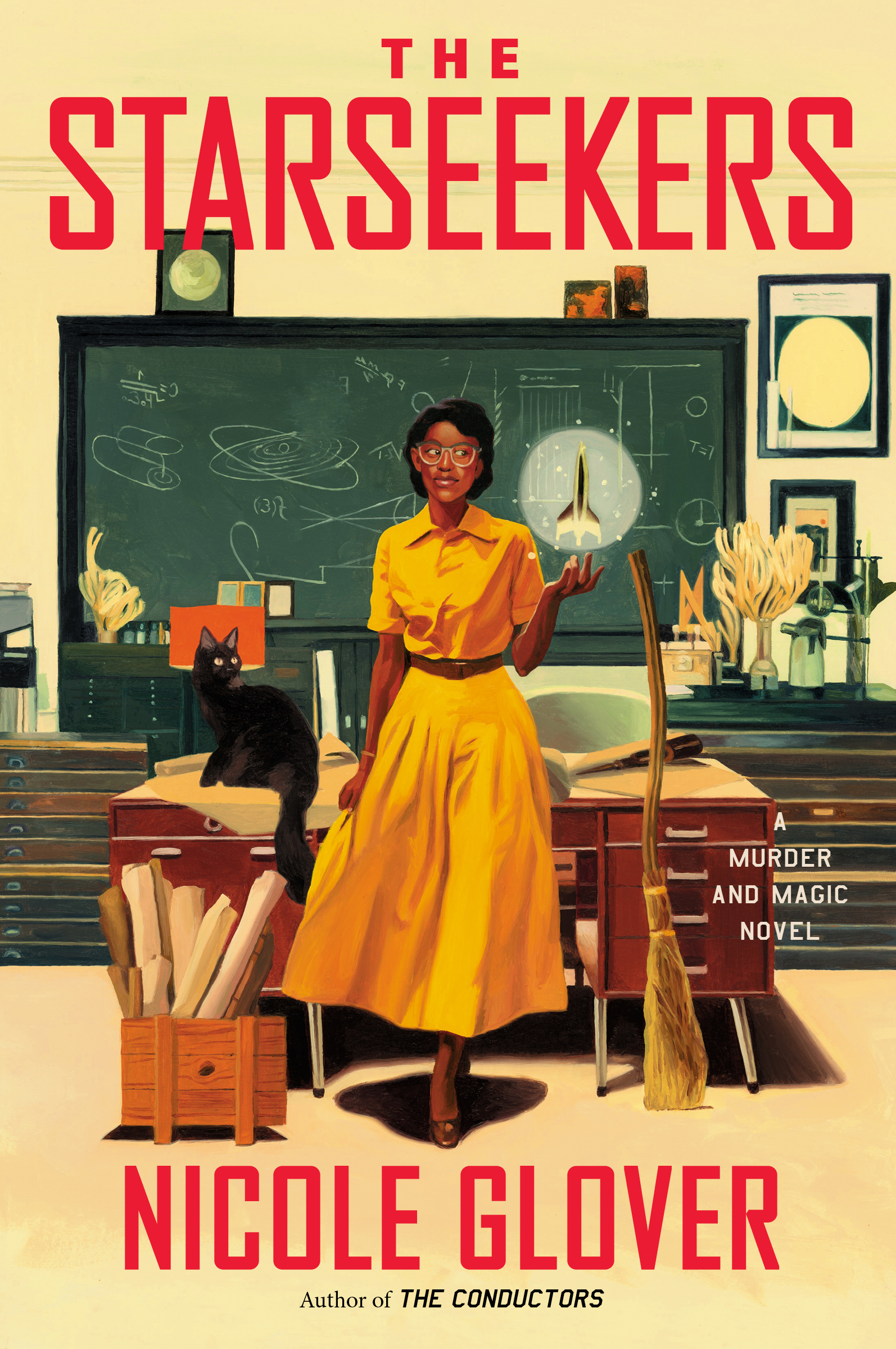
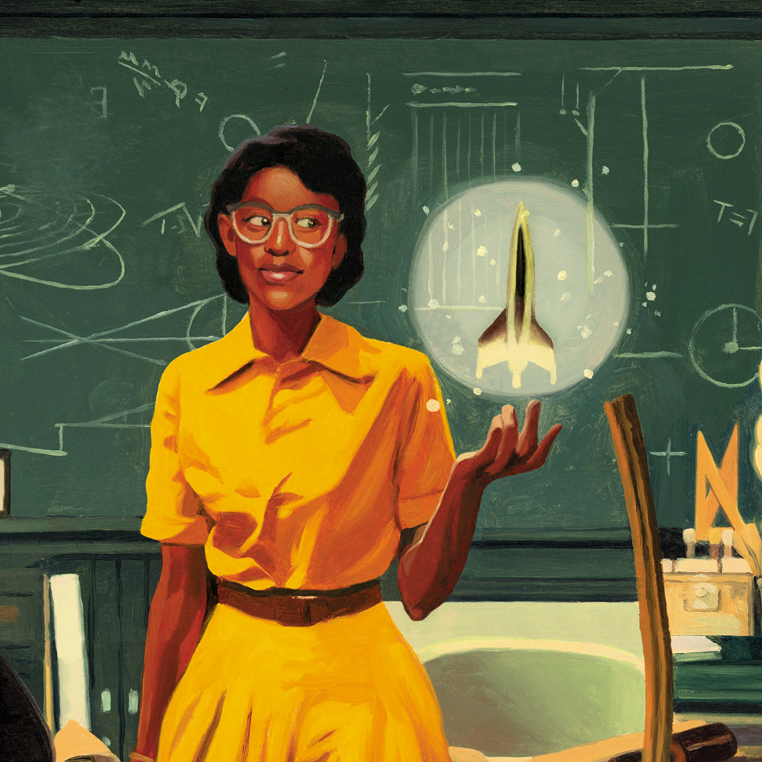
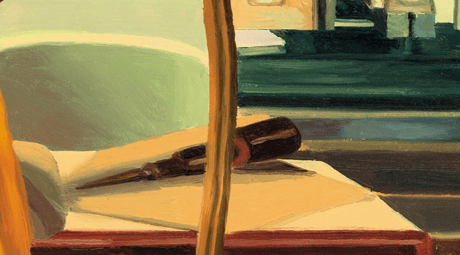
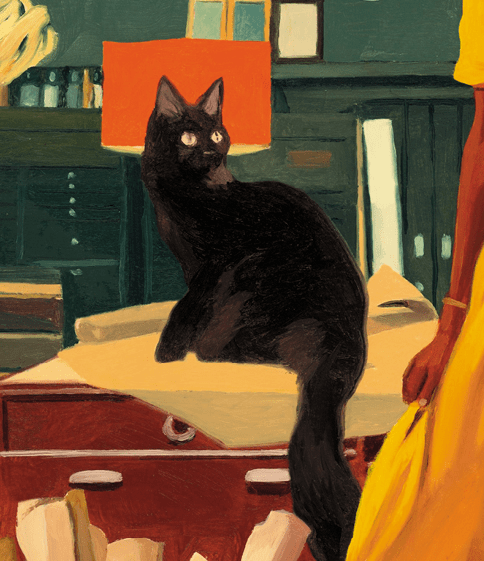
The cover puts the main character, Cynthia Rhodes, front and center featuring her surrounded by the organized chaos of her office. With a background of scattered calculations on a chalkboard and a desk covered in maps, it’s my hope that readers will pick up the Hidden Figures vibes and the hints of STEM goodness contained in the pages. It’s a very nerdy book in a way and a book quite special to my heart. My favorite bits on the cover is the subtle whimsical touches of magic, like the rocket and the broomstick. Cynthia’s cat, Dot (aka the real love of Cynthia’s life), makes the cover and look the cat’s special brand of magic sprinkled throughout the story.

The Starseekers is a historical fantasy sent in the 1960s in a world similar but slightly different than our own. Expect a rousing adventure, a twisty mystery, a dynamic friend group, some old familiar faces, a bubbly splash of romance, and of course plenty of bewitching magic!

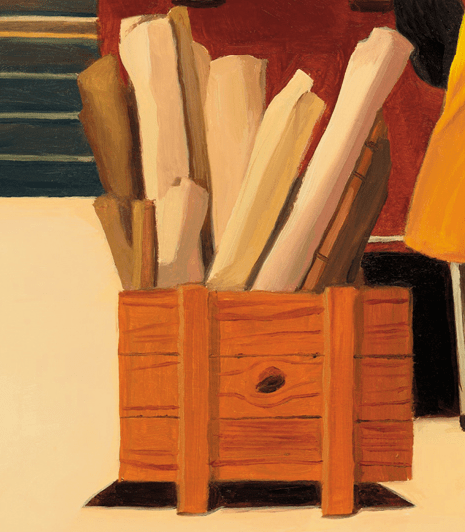
A few closeups of the cover:

The Starseekers

Head to the 1960s for a Hidden Figures meets Indiana Jones historical fantasy. Cynthia Rhodes is an arcane engineer at NASA, who also co-hosts a magical education show with archaeologist Theo Danner. A series of strange accidents at NASA, and elsewhere, put them on the trail of a mystery that entangles them in both peril and murder most foul.

Arriving 1/6/26

Harper Voyager * Barnes & Noble * Bookshop

Amazon * Kobo

Snag an early review copy on Netgalley!

Don’t forget to request at your local library!

Upcoming Events

Capclave 2025

Rockville, MD

9/20

11am – Mixing the Genres

1pm – Purposeful Diversity in SF & Fantasy

2:30pm – Reading

5pm – Uses of History

9/21

10am – Magic: Wonder or Mechanics?

2pm – Point of View

Flights of Foundry

9/26 – 9/28 – Virtual

9/26

4pm ET – PRAY FOR US SINNERS: Dissecting the Film’s impact, the History Behind it, and More

7pm ET – Public Transportation: The Wheels on the Bus Go Round And Round, For Now….

10pm ET -Chill-n-Chat

9/27

9am ET – Altering Adaptations

5pm ET – What’s Great in Fantasy Right Now

9/28

2pm ET – The Map is (not) the Territory

Griot and Grey Owl

11/8 – Durham, NC


Subscribe

Go back

Thank you for subscribing!

Fantastic! You are now subscribed to Nicole Glover’s newsletter, Writing With Starlight and will receive an email notification when a new post is published.
Warning
Warning
Warning.

Nicole Glover is a fantasy writer and the author the Murder and Magic series which includes THE IMPROVISERS. Her next book is THE STARSEEKERS, forthcoming 1/6/26
The Starseekers is on NetGalley!

Character Art by Alecia Doyley

This week The Starseekers arrived on NetGalley!

Nothing says we’re getting closer to The Starseekers coming out, than Advance Review Copies going live.

Feel free to request and get a sneak peek of the 1960s with magical NASA, broomsticks, and a heady dose of murder! I’m excited to start sharing Cynthia’s story, as I had a great deal of fun writing this book. I got to geek out on some of my favorite topics, plot a rather twisty mystery, and a had delightful time crafting the romance between Cynthia and her dashing archaeology professor love interest.

While the book doesn’t have a cover right now…..that won’t be true for long! It’s being finalized as we speak and should be live fairly soon.

I heard a rumor I’ll be getting printed ARCs as well! In the coming weeks be on the lookout for a giveaway. Subscribers to my newsletter are automatically entered, but you can up your chances by interacting with any social media posts I’ll make.


Upcoming Events

Baltimore Book Festival

9/13 – Baltimore, MD

11am – Twisting History: How Speculative Fiction Reimagines History

12pm- Signing

Capclave 2025

Rockville, MD

9/20

11am – Mixing the Genres

1pm – Purposeful Diversity in SF & Fantasy

2:30pm – Reading

5pm – Uses of History

9/21

10am – Magic – Wonder or Mechanics?

2pm – Point of View

Flights of Foundry

9/26 – 9/28 – Virtual

9/26

7pm – Public Transportation: The Wheels on the Bus Go Round And Round, For Now….

10pm -Chill-n-Chat

9/27

9am – Altering Adaptations

5pm – What’s Great in Fantasy Right Now

9/28

2pm -The Map is (not) the Territory

Griot and Grey Owl

11/8 – Durham, NC


The Starseekers

Head to the 1960s for a Hidden Figures meets Indiana Jones historical fantasy. Cynthia Rhodes is a arcane engineer at NASA, who also co-hosts a magical education show with archaeologist Theo Danner. A series of strange accidents at NASA, and elsewhere, put them on the trail of a mystery that entangles them in both peril and murder most foul.

Arriving 1/6/26

Harper Voyager * Barnes & Noble * Bookshop

Amazon * Kobo

Cover Coming Soon!

Snag an early review copy on Netgalley!

Don’t forget to request at your local library!

Subscribe

Go back

Thank you for subscribing!

Fantastic! You are now subscribed to Nicole Glover’s newsletter, Writing With Starlight and will receive an email notification when a new post is published.
Warning
Warning
Warning.

Nicole Glover is a fantasy writer and the author the Murder and Magic series which includes THE IMPROVISERS. Her next book is THE STARSEEKERS, forthcoming 1/6/26

How Weddings Can Enhance Your Storytelling

My week began with my parents celebrating their 40th wedding anniversary and will end attending the wedding of a cousin of mine. So weddings have been on my mind lately, mainly because they are a great excuse to bring characters together… and allow important plot beats to unfold.
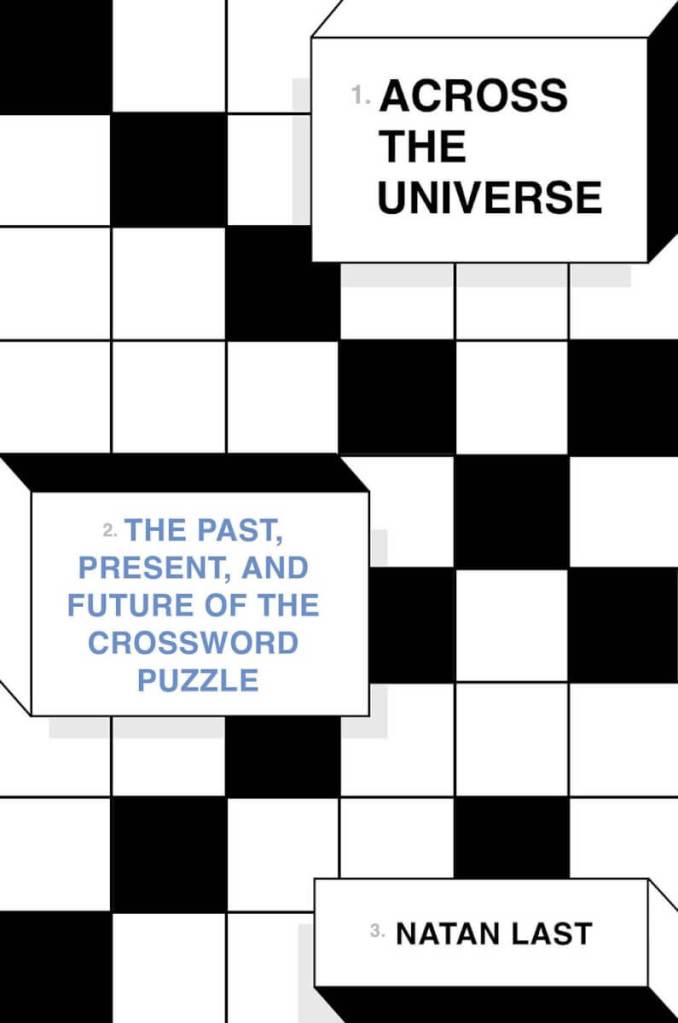
If I started listing the various stories that include a wedding as a major plot point or device, it’ll be a very long list and one that cross many genres. You’re probably thinking about several fictional weddings right now that are pivotal for characters or plot reasons, because weddings are nothing if not memorable Weddings are ubiquitous across fiction, for even if not everyone chooses to get married it’s a common life experience that most people have some degree of familiarity.

So given as weddings on the mind I have a few thoughts in relation when it comes to including them in stories.


1.Weddings make a great setting no matter the genre

Weddings create this liminal space where ritual and tradition arise, and everyone shuffles into familiar but uncomfortable roles, and time acts oddly during the event. Because there are a number of familiar aspects when adding genre aspects like fantasy, mystery, or sci-fi, it’s makes lovely pairing. Because the wedding is a familiar enough other elements can be laid against it as a complement or contrast in tone.

2.Weddings bring out the best and worst of people – and great character moments

Wedding do a number on the emotions. Whether its the stress of wedding planning or the unexpected feelings that arise at seeing others getting married, the idea of wedding has major impacts and can lead to some great character moments. The events around a wedding can reveal surprising hidden depths of snobby unlikable banker whether they’re getting married to the love of their life – or watching their greatest enemy find love.

3. Weddings can act as world building

Particularly for fantasy and scifi, weddings are a window into the world and its customs, especially if the creator takes care to think about what these new customs might mean. Although only given a glimpse, readers can gain a deeper idea of customs of the fictional world. From A Civil Campaign to Andor I love seeing how wedding could be rendered differently. The choices for ritual and symbolism are very interesting to me, and makes the story richer.

4. Weddings puts strangers in a room and shakes up dynamics

There are few events that bring in an assorted cast into a singular location and can make it seem plausible. Weddings are perfect gathering spot especially if it’s a rather large one. The beauty of crowd can allowed for introductions and or different character pairings that might not be easily done elsewhere.

5. Wedding mark major life changes – as well as plots twists!

Outside of Romance, which typically end with weddings, in other stories when weddings appear it marks a pivotal change. Whether it’s getting a mystery solving detective couple to tie the knot as well as they tie up murderers as the climax of their characters arcs, or a glitzy political wedding between two planets to prevent a war, weddings can be big moments in the plot and characters. Making the most of that can lead to some very memorable moments in your story.


Upcoming Events

Baltimore Book Festival

9/13 – Baltimore, MD

11am – Twisting History: How Speculative Fiction Reimagines History

12pm- Signing

Capclave 2025

9/20 & 9/21 – Rockvile, MD

Flights of Foundry

9/27 & 9/28 – Virtual

Griot and Grey Owl

11/8 – Durham, NC


The Starseekers

Head to the 1960s for a Hidden Figures meets Indiana Jones historical fantasy. Cynthia Rhodes is a arcane engineer at NASA, who also co-hosts a magical education show with archaeologist Theo Danner. A series of strange accidents at NASA, and elsewhere, put them on the trail of a mystery that entangles them in both peril and murder most foul.

Arriving 1/6/26

Harper Voyager * Barnes & Noble * Bookshop

Amazon * Kobo

Cover Coming Soon!

Don’t forget to request at your local library!

Subscribe

Go back

Thank you for subscribing!

Fantastic! You are now subscribed to Nicole Glover’s newsletter, Writing With Starlight and will receive an email notification when a new post is published.
Warning
Warning
Warning.

Nicole Glover is a fantasy writer and the author the Murder and Magic series which includes THE IMPROVISERS. Her next book is THE STARSEEKERS, forthcoming 1/6/26

Is Historical Fiction That Much Different than Historical Fantasy?

History for those who choose to study it brings to light a number of wonders, atrocities, or curiosities that often are confined to dusty books. 

For writers, history becomes an avenue to write about current events by taking advantage of the distance that the past allows. But to write historical fiction, means to make a number of assumptions…. and sometimes bending the truth to better serve the story.  An act that can take a tale from plausible to pure fantasy. 

Which begs the question: is  historical fantasy that different from historical fiction?


Naturally the presence of fantastical elements is the defining difference between genres.

But sometimes it’s the only real difference. As there are often liberties taken with historical fact, sometimes to the point the facts are hardly in conversation.

Historical Fiction  ≠ Fact. Some pieces of historical fiction are very factual…and some pieces aren’t that much at all.

You see this more often in movies where the historical characters hardly resemble the person they are based on, mainly because the name attached is more important. People’s lives are quite complicated and any rendering in fiction can’t properly capture it a times.

Even in stories that appear as very factual play loose with details. Hamilton for example presents itself as largely biographical despite modern flair and hip-hop stylings. However if you dig into the history you’ll find there are a few statements in the play, that either misrepresent certain facts (the Schuyler sisters actually did have a brother) or simply gloss over. Some changes can be quite small, but sometimes I think a story could be much more interesting when real history is shown without embellishments.

Given the importance of getting facts straight why do writers bend history?

Some Facts Don’t Go the Plot

  • Finer details about inventions, battles,  don’t always work for the book’s settings
  • Some real life people are too old or too young for the time period selected 

Opting for Drama

  • Sometimes facts are changed to heighten the drama. 
  • Facts are often distilled to make a tighter narrative 

We Can’t Comprehend Time

  • We compartmentalize eras into broad time frames or aesthetics 
  • Unless we specialize in a time period, our ability to draw lines between eras varies

History is just a setting

  • Historical time period acts as a flavor to the story
  • More people interested  in an era for aesthetics, social movements, or technology 
  • Setting is the medium in which themes are being used to filter through

We don’t know all the details

  • All we have is general ideas of the past
  • The further in the past we go, the less we know
  • We know less about certain groups that don’t get written about in history
  • We know even less about the daily lives beyond the few bits that gets preserved

Not so different after all?

To write both historical fiction and historical fantasy requires  an understanding of facts, figures, and important events. Across genres certain themes and plot points might appear in both (or inspired by).

While some historical fiction can veer into fantasy, the intent of being historical fiction in the first place still remains. As you write notice the direction your story is taking and be upfront about how historically accurate you remain.

As always, the conscious choices we make as writers on what to choose or exclude makes all of the difference.


The Starseekers

Head to the 1960s for a Hidden Figures meets Indiana Jones historical fantasy. Cynthia Rhodes is a arcane engineer at NASA, who also co-hosts a magical education show with archaeologist Theo Danner. A series of strange accidents at NASA, and elsewhere, put them on the trail of a mystery that entangles them in both peril and murder most foul.

Arriving 1/6/26

Harper Voyager * Barnes & Noble * Bookshop

Amazon * Kobo

Cover Coming Soon!

Don’t forget to request at your local library!

Subscribe

Go back

Thank you for subscribing!

Fantastic! You are now subscribed to Nicole Glover’s newsletter, Writing With Starlight and will receive an email notification when a new post is published.
Warning
Warning
Warning.

Nicole Glover is a fantasy writer and the author the Murder and Magic series which includes THE IMPROVISERS. Her next book is THE STARSEEKERS, forthcoming 1/6/26
Writing as Resistance:Past, Present, and Future of a Writing Rebel

I just returned from Seattle. While I was there for WorldCon, I met a lot great people, did a little sightseeing , and had some very tasty meals.

Of the many things I got to do at the con, I was part of a few panels. They all ended up being quite good, but Writing as an Act of Resistance was one that still left me mulling over the ways writing and making art is still very good way to resist.

Art inspires, art provokes, and art helps us envision a reality that is not so distant. This is especially true in areas of fantasy, science fiction, and speculative fiction where what ifs can reimagine the past, present, and future. So I’ve been thinking lately about what I can do both as individual and as part of group in these interesting times.

Past

When I was promoting my first book, The Conductors. I did it in the shadow of the Summer 2020, a summer sparked by George Floyd’s murder and BLM protests as well open conversation about cops, policing, and the depiction of cops in media. One things I noticed as I write and consume mysteries is the presence of cops in these stories and the roles they play. I reflected on all of this in more in an article for CrimeReads. Over the years I have really interesting responses to this pieces plus a rather thoughtful conversations about it on the Shedunnit podcast.

Present

I recently read We Refuse by Kellie Carter Jackson. I picked this up drawn in by the provocative cover that emphasizes the long history of Black Resistance. The book breaks down this history in sections: Revolution, Protection, Fight, Flight, and Joy.

The book has many illuminating insights, there was two big takeaways I took.

First the section on protection, which spoke about the ways Black folks sought protection from violence either through education or social standing. While these aspects show up in my books too, I realized with a start I showed protection in another way, through magic. Protective spells, wards, spells of warning, are some of the most used magic by the main characters. Looking back it’s interesting to me how I subconsciously added this area of resistance in my story.

The second most poignant point, is the coda at the end, in which the author related that lifeguards are instructed to not rescue a drowning person who is violently flailing about in the water, since doing so would risk their own life. The lifeguards are told to let them drown.

The author ties this sentiment to reaching out to educate or assist those who stubbornly cling to racist or intolerant beliefs despite the harm holding such beliefs cause them. To let them drown means realizing that some people are beyond saving, and that activists need to look after ourselves first before expending energy and time on people who will only harm you instead.

The statement, let them drown is powerful to me, as it’s always been my instinct to educate, when perhaps my time is spent in showing up where my help will be needed the most instead.

Some Actions That Are Not Protesting or Voting

Note: I did not put together this list. I found this resource and wanted to share with others who may find it useful. I have shared a few sections, but there are still plenty more suggestions on the original list.

Mutual Aid

Redistribute your wealth to individuals in need.
Donate to Mutual Aid Groups.
Organize fundraisers for local groups.
Knit or crochet items for your houseless neighbors.
Participate in #Warm Holidays 2024. 
Organize local free stores to distribute needed items and supplies to community members. Can’t do a whole store, how about a free table
Help with disaster relief.
Organize a childcare collective. Another example here
Start your own automotive free clinic.
Create a tool library in your neighborhood.
Start a repair cafe.
Read about mending circles here and here. Create your own.
Set up a listening booth.
Organize or participate in community clean-ups.
Start a POD.
Start a bike library.

Organizing/Advocacy

Join or start a union.  
If you’re a young person interested in unions, get involved with Gen Union.
Form an affinity group
Participate in consumer boycotts. Check out #TeslaTakeDown
Organize or attend neighborhood assemblies and people’s movement assemblies
Attend community board and other local meetings.
Organize response and support for survivors of violence. Sign up to be trained as a volunteer with domestic violence and sexual assault organizations/groups.

Mutual Aid: Food

Donate to food programs (for example this one and donate to them here).
Cook and bake for community group meetings.
Organize a bake sale.
Start or join Food Not Bombs.
Set up a Free Fridge in your community.
Start or join a local community garden. Benefits of gardening are here.
Start a Meal-Based Residency Program.

Political/Popular Education

Organize or participate in political education. Here’s a helpful guide. Some study guides.
Facilitate a local or virtual teach in about the attempted privatization of the post office. Join with others to do this on May 3 and beyond. 
Establish ongoing study and book groups – sign up for a training on how to facilitate reading groups.
Organize a monthly community film screening & discussion. 
Participate in skill-sharing and trainings.
Offer skill-sharing and trainings.
Get involved in Citizen University.

Libraries and Schools

Run for or seek appointment to your local library board.
How to Fuck Up an Asshole School Board.
Organize community freedom schools (the Children’s Defense Fund offers one model but there are many others too: here and here).
Here’s a list of 10 ways to support your local public libraries.
Request and read diverse books by BIPOC and queer authors. We Need Diverse Books is a great resource to find titles. 
In the US, EveryLibrary fights censorship, supports grassroots advocacy for libraries, fights anti-library legislation and helps libraries seek necessary funding. They have more specific and timely calls to action on their site.
Push back against book bans and the groups that ban books by requesting banned and challenged titles.
Libraries can also be great places to host a book group or community support gathering, like some of the other meeting and mutual aid ideas shared elsewhere in this list.
Start a healing justice lending library.
Start your own version of the Library Dads.

Other Individual Actions

Garrett Bucks recently created a useful list of actions you can take on your own. 
Volunteer your art, technology, design, legal skills to local efforts, organizations, groups.
Watch this and write letters to the elderly also here.
Make zines and pamphlets on various topics and distribute them in your communities [laundromats, cafes, public libraries, schools, etc…] 
Start a community newsletter or bulletin to share information about local mutual aid.
Create or redistribute art and media to counter mainstream propaganda.
Amplify the calls for support from people of color, disabled people and others.
Uplift queer and trans voices.
Share vital info online and in person. 
Support friends who are attending/planning actions/protests

Future?

Not too long ago I wrote alt-history fiction story mainly as an experiment. I remembered reading that Abraham Lincoln had a different VP in his first term, Hannibal Hamlin who missed becoming president by a manner weeks. From from what I read of him he probably would have better supported Reconstruction efforts, which sparked the story.

In this alternative world, I imagined the US with a steampunk flair featuring airships, automatons, rather progressive politics for the 1910s, and more. I made several alternative maps for the world, including one of D.C. which was one of the main settings. For this story, D.C. gained statehood and that the federal district was carved out as it’s own thing.

Being from Virginia, I knew off hand a few reasons why D.C. still isn’t a state despite it being far more populous than Vermont and Wyoming. The research I dove into explained the historical reasons in far more detail (although like most things in the US it boils does to racism being the chief reason). However until I wrote my story I hadn’t truly imagined what it would be like if statehood occurred.

With recent news, about National Guard deployment and the federal government taking advantage of D.C.’s unusual status to bully and threaten the city and its people, I’m even more of am advocate for statehood. Mainly because when D.C. gains statehood it’ll be part of a radical change that has swept over the country. A dream perhaps, but most dreams aren’t always out of reach.

Until then I continue to write and tell stories that reach across time and show what can be possible.


The Starseekers

Head to the 1960s for a Hidden Figures meets Indiana Jones historical fantasy. Cynthia Rhodes is a arcane engineer at NASA, who also co-hosts a magical education show with archaeologist Theo Danner. A series of strange accidents at NASA, and elsewhere, put them on the trail of a mystery that entangles them in both peril and murder most foul.

Arriving 1/6/26

Harper Voyager * Barnes & Noble * Bookshop

Amazon * Kobo

Cover Coming Soon!

Don’t forget to request at your local library!

Subscribe

Go back

Thank you for subscribing!

Fantastic! You are now subscribed to Nicole Glover’s newsletter, Writing With Starlight and will receive an email notification when a new post is published.
Warning
Warning
Warning.

Nicole Glover is a fantasy writer and the author the Murder and Magic series which includes THE IMPROVISERS. Her next book is THE STARSEEKERS, forthcoming 1/6/26
Discover the Other Hidden Figures at NASA

Both the film and the book Hidden Figures reconfigured for the general public who worked at NACA/NASA during the pivotal moments of the space race. A NASA scientist had always been seen as one particular type but Hidden Figures showed that was far from the truth. With the publication of the book which spurred similar works, as well as the celebrations around the moon landing’s anniversary, I had plenty of resources at my fingertips as I began writing the first draft of The Starseekers.
Although the ladies featured in film (Katherine Johnson, Dorothy Vaughn, and Mary Jackson) are fabulous, I wanted to share some of the lesser known figures I came across during my research. Some inspired not just the main character, Cynthia Rhodes, but the rest of her co-workers at the fictional NASA facility, Ainsworth Research Laboratory.

Truthfully many of the people I list here were recognized over the years with books, articles and more celebrating their contributions (mainly in the Black media outlets) but became forgotten over time. How much we know about each person also widely varies. While some I can find numerous books, newspaper articles, podcasts, blog posts, and even documentaries about them, for others I could only find a photograph and a name credit.


Yvonne Young Clark

Yvonne Clark got interested in engineering through a love aeronautics and tinkering with small appliances. She worked primarily as a professor of engineering but used her summer breaks to work at places like Frankfort Arsenal and Westinghouse Defense and Space Center.

Working at both as a NASA Contractor, Clark calculated movements for missiles and rockets, found out what caused heat spots on the Saturn 5, and was part of the team that built the Apollo Lunar Sample Return Container, which brought back moon rock samples to Earth.

Melba Roy Mouton

Melba Mouton began her work at NASA at the Goddard Space Flight Center analyzing satellites. One of her first projects involved the Echo 1, which was a key satellite that helped expand communications around the globe. Her knack for interpreting data eased her transition into computer programming.

She eventually was promoted to Assistant Chief of Research Programs in the Trajectory and Geodynamics Division.

Evelyn Boyd Granville

The second Black women to earn a Ph.D in mathematics in US, Evelyn Boyd Granville was worked as a NASA contractor through IBM and North American Aviation Company. She wrote computer programs for the IBM 650 and helped launched satellites with Project Vanguard. Passionate about STEM education, she went into academia in 1967 and spent the rest of her career teaching the next generation.

Jeanette A. Scissum

Jeanette Scissum worked at Marshall Space Flight Center as a mathematician. Working as space scientist, she helped forecast the sunspot cycle and and led studies in the Atmospheric, Magnetospheric and Plasma project.

An advocate for inclusion she became an EEO officer in 1973 and acted as a champion for her fellow employees even at the risk of her own career. She eventually received NASA’s Equal Employment Opportunity Program Award. Working mostly with computer systems near the end of her career, she retired from NASA in 2005.

Mary Golda Ross

Mary Golda Ross was the first Native American Engineer due to her Cherokee ancestry. Her career began at Lockheed during WW2 working on improving fighter planes and other military aircraft, with a focus on aerodynamic forces. Working as a NASA contractor through Lockheed she worked on a number classified projects related to missiles.

Farouk El-Baz

Farouk El-Baz is a Egyptian geologist who worked at Bellcomm to review images of the moon seen from the Lunar Orbiter. Serving as a lead on the lunar site selection committee, he identified not just the place where the astronauts should land but the geological features that would be great sites for them to explore. He also trained the astronauts in observation and photography of the moon’s surface.

Annie Easley

Annie Easley entered NACA in 1955 as one of the four Black employees at Lewis Flight Propulsion Laboratory (later Glenn Research Center). While she began doing calculations by hand, the move to machines had her learning computer programming. One of her biggest projects was Centaur, a rocket that used a unique fuel system. Centaur was one of the lab’s great achievement for it was used to launch satellite and vehicles, as well as the Cassini (the spacecraft sent to to Saturn in 1997).

Alphonso Stewart

Alphonso Stewart worked in engineering on many projects such as the Lunar Landing Research Vehicle and worked on storage batteries used in lifting body aircraft.

Daniel Nichols

Daniel Nichols work at NASA as a coordinator between Flight Operations and IBMs due to his extensive knowledge in computers. He also sat in mission control during Apollo-era launches.

Jesse Strickland

Jesse Strickland was an architect. He joined NACA in 1950 in the Drafting Section which became NASA’s Architectural Design Branch in 1958. He designed new structures, modernized old buildings, and updated the procedures used in architectural work.

Most of the Plum Brook campus ( now Neil A. Armstrong Test Facility) at Glenn Research Center was designed by him.

Sara Thompson

Sara Thompson was a quality control supervisor, at Stouffer’s Foods. Stouffer’s was a NASA contractor and selected to provide the meals for Apollo 11 astronauts post their return from the moon when they were quarantined out of fear of “moon bugs”. Thompson tested the meals the astronauts ate putting her chemical and food science knowledge to good use.

Hazel Fellows

Hazel Fellows was among the many seamstresses at International Latex Corporation who made the Apollo spacesuits. Latex was found to be great material for spacesuits, as it was durable and flexible enough for astronaut suits. The seamstresses at ILC played an active role in designing suits, combining, techniques, experiences, and innovation to create the suits that went to the moon and back.

Charles Smoot

Charles Smoot worked at Marshall Space Flight Center in the Astrionic Lab, preforming analyses for navigation in the Saturn launch vehicles.

He also created a program that help Black students across the the South who were studying math and physics top get connections to find work at NASA and other placements in the industry.

Christine Darden

Christine Darden arrived at NASA in 1967. Initially hired to crunch data, she would eventually enter the engineering section. One of her most notable projects involved sonic boom minimization.

Valerie Thomas

Valerie Thomas began her time at NASA translating gamma and ultraviolet radiation data from Orbital Geophysical Observatory satellites. In the 1970s she worked on Landsat satellites and managed the Large Inventory Crop Area Experiment overseeing research and development as well as a large team . She also has a patent for the “illusion transmitter” light bulb that she invented.

Patricia Cowings

Patricia Cowings worked at Ames Research Center in the Biomeidical division studying psycho-physiological problems that astronauts developed in space aka “space-sickness”.

While she never went into the space she became the first US woman to receive scientist-astronaut training in 1978.

More Hidden Figures Still Left to Uncover

This list just scratches at the surface of the numerous people who have worked at NASA either as an employee or a contractor.

There are many more names we might never know, as many have already passed on with their stories left untold. But the ones we do know help change NASA’s narrative and lead to new discoveries.

After all, while the common version of history may paint one version, the true story holds many more vibrant colors.

Some Resources to Check out:


The Starseekers

Head to the 1960s for a Hidden Figures meets Indiana Jones historical fantasy. Cynthia Rhodes is a arcane engineer at NASA, who also co-hosts a magical education show with archaeologist Theo Danner. A series of strange accidents at NASA, and elsewhere, put them on the trail of a mystery that entangles them in both peril and murder most foul.

Arriving 1/6/26

Harper Voyager * Barnes & Noble * Bookshop

Amazon * Kobo

Cover Coming Soon!

Don’t forget to request at your local library!

Subscribe

Go back

Thank you for subscribing!

Fantastic! You are now subscribed to Nicole Glover’s newsletter, Writing With Starlight and will receive an email notification when a new post is published.
Warning
Warning
Warning.

Nicole Glover is a fantasy writer and the author the Murder and Magic series which includes THE IMPROVISERS. Her next book is THE STARSEEKERS, forthcoming 1/6/26

7 Tips for Writing Historical Fantasy

I’ve  been writing historical fantasy for some years now, and have a few thoughts on how to do it well. Historical fantasy isn’t just adding magic to the story. It’s about blending magic thoughtfully to history in a ways that transforms the story.

The following rules are mainly personal preference. They’re more guidelines I follow while working on Murder & Magic and any other historical fantasy projects.

1) Magic should be deeply woven into the story

If you change your mind and decide to make the story historical fiction, you’ve done something wrong if your only changes are deleting a few paragraphs or a chapter.  Removing magical elements, should require a deep rewrite, where the story is recognizable as it once was, but uniquely different from the previous draft. 

Magic in the story should be a driving factor in character arcs,  minor subplots, and especially the main plot. If it’s not, the fantasy elements are just hanging around like mismatched curtains and everyone including your reader is wondering why it’s even there.

2) Know when major events happens so it won’t derail your story

When selecting your time period  be very aware of when major events in history happen. If you don’t include, say the Wall Street Crash of 1929 in a story set in February 1929 even people not well-versed in history will be puzzled why you skipped such a major moment. You’ll need to have a good reason for missing the event or make it clear the book’s story stops before the event occurs. Otherwise readers will distrust anything you say about history.

On the other hand, knowing when major events in history occurs, helps you plan out your story. Whether it’s plotting it around the event or avoiding trampling over that corner of history. When setting the dates for my books I carefully selected months when I didn’t have to worry about major events that I needed to reference. Also keep in mind while it’s good to include major events, try not to force it, especially if you’re only including it because you feel like you must instead of it just being a natural flow of the story.

3) Use historical persons sparingly and with care

I don’t like including historical people as major characters, or even secondary characters, in my stories. Real people are messy and don’t always neatly slot into the places I want them to be. I rather make original characters that take inspiration from such people, especially when there is only a single element I’m interested in in the first place.

Although it is fun to sneak in cameos or references to historical people!

4) Don’t fret the small stuff,  historical fiction is all about vibes

For my last book, I went searching for the etymology of a word to make sure I was using it in the context that someone in the 1930s would use it in.  A simple enough task, but I kept finding so much conflicting information! Articles and examples from books at the time gave me different answers, and as I read through it all I was very close to pulling my hair out.

Then I remembered, that the word I was fretting over was such a small detail folded into many plot movements. All my word choice need to be was something that seemed historical to the modern reader. At the end of the day as long as all the elements of the story seem plausible for the time period, it will be enough for most readers. Especially when your story has dragons or witches in them.

5) Remember this isn’t a history lesson

Generally while readers love learning interesting things, they aren’t always ready for a dissertation level spiel on a niche subject. You need to find a balance between sharing historical details relevant to the plot or characters. Sometimes it is good to go into detail about Paris’s sewer system in the 1800s if a large part of the plot hinges on using the sewers. On the other hand information if it’s just plopped down in the text it will stop the plot in its tracks, and worse readers will drop off too.

I always say that for all the historical research you do, only about 10% needs to be on the page. The rest is for you as the writer to know and let it inform your story.

6) Weave in magic with care and grace

Sometimes you want to shove zombies into a 19th century setting and be done with it. But to do it right requires pairing the element of magic with the social context of the time. For example I paralleled wand laws with gun laws for my book set in the 1870s. The element of magic became stronger because I grounded it with a real piece of history. Magic doesn’t have to be tied to every element but it should feature thoughtfully into the world and story.

7) When in doubt a sprinkle of magic can help!

When you get stuck on a historical fact that’s not working in your favor, feel free to add magic to it. Doing so makes it clear it’s not realistic at all and gives you more creative freedom.

In general, it’s also good to keep in mind at the end of the day it’s a fantasy story. 100% accuracy isn’t a promise when dragons roam the skies. As long as you get the major details right, readers will let themselves be swept up in your fancies!


Upcoming Events

Concurrent Seattle – 8/14

2:30pm – Music and Monsters: A Sinners Panel

World Con Seattle – 8/15 -8/17

NASA’s Unsung Heroes – Fri. 1:30pm

Signing – Fri. 6pm

Table Talk – Sat 10:30am

Writing as an Act of Resistance Sun. 10:30am

Libraries: Magical and Radical Sun. 1:30 pm


Personal Updates

Recently Watched

If there’s ever a show that was made for me in mind, The Residence is it! It’s like someone rummaged around in my mind and plucked out some (okay, all) of my favorite things.

A quirky murder mystery, birds and birding, fun twists and turns, a stellar cast clearly having fun, clever editing, great visuals, and storytelling that gives us the most pressing answers but trusts viewers enough to fill the in blanks.

It was on my radar because I first heard about because the late, great Andre Braugher was set to star originally. I was iffy about a show being set in the White House, but luckily the show’s quirky world reminded me more of a Wes Anderson film with a touch of Pushing Daisies. The only pity is that it looks like we won’t get more stories in the world, but luckily the show works well as a mini-series with everything you wanted answered by the end.

Writing Updates

Novel: Drafting, 56K Written

Short Story 2: First Draft Complete, 3K

Short Story 3: First Draft Complete, 2K

Novella: 3K written

Secret Project: On Deck


The Starseekers

Head to the 1960s for a Hidden Figures meets Indiana Jones historical fantasy. Cynthia Rhodes is a arcane engineer at NASA, who also co-hosts a magical education show with archaeologist Theo Danner. A series of strange accidents at NASA and elsewhere, put them on the trail of a mystery that entangles them in both peril and murder most foul.

Arriving 1/6/26

Harper Voyager * Barnes & Noble * Bookshop

Amazon * Kobo

Cover Coming Soon!

Don’t forget to request at your local library!

Subscribe

Go back

Thank you for subscribing!

Fantastic! You are now subscribed to Nicole Glover’s newsletter, Writing With Starlight and will receive an email notification when a new post is published.
Warning
Warning
Warning.

Nicole Glover is a fantasy writer and the author the Murder and Magic series which includes THE IMPROVISERS. Her next book is THE STARSEEKERS, forthcoming 1/6/26

The Real Magic of Educational Television

I grew up watching a great deal of educational television, and to this day many of the songs, catchphrases, or segments still lurk in my memory only to emerge at the most unexpected moments. We absorb a lot of knowledge from media, and knowing this educational media uses the format to impact numerous lessons to young children in both overt and more subtle ways. The impacts of educational television is quite interesting, but it’s also revolutionary, because some of the biggest names, like Sesame Street and Mr. Rogers were created in response to the seismic social change of 1960s A legacy that continues in the shows that follows like Gullah Gullah Island, Blue’s Clues, and especially Ms. Rachel.

My next novel,  The Starseekers, contains a minor subplot involving an educational show, or in this case an educational show that teaches spells to its young viewers.  In the book, the main character Cynthia and her love interest, Theo, are brought together to co-host the show.  While they both will admit they only did the show to spend time with the other, educating young minds about magical concepts was also just as appealing for them as they aspire to share knowledge.

How this subplot even ended up in the book first place, involves Sesame Street’s 50th Anniversary celebrations. During that time I came across an article about the “The Unmistakable Black Roots of Sesame Street”  as well as others mentions about about Chester Pierce, a Black psychologist who worked on the show. Pierce saw the show as a means to counteract negative stereotypes and provide positive messaging to its young viewers. Sesame Street when it began in 1969 was the most diverse cast on television and from the start put Black and Hispanic characters in leading roles. Creator, Joan Cooney Ganz a television executive who worked once worked with Head Start, strongly felt that Black children who lived in cities should be the core audience (hence the urban setting for the show), thus making Sesame Street today welcoming to all from the very beginning. Beyond just the main cast and setting, numerous Black celebrities, such as James Earl Jones, Mahalia Jackson, Jackie Robinson, and Shirley Chisholm, all dropped by in that first revolutionary season.

Sesame Street was not the first educational show, in my research I found that throughout the 1950s and 1960s there were several shows trying to get children to learn their ABCs, but they lacked a certain spark. These early shows replicated classroom sets, or leaned too much on the entertainment value, and most crucially presented weren’t that diverse. With Sesame Street there was of course the puppets to make it stand out, but there was the sensibilities it took from advertising. Those short segments the show is famous for, contrasts different visual styles, (puppets, humans, cartoons, etc) to keep children’s attention – and to bring it back when lost! The show had several educators, child care providers, and psychologists working on it,  including co-creator, Lloyd Morrisett a children’s psychologist. There were even creatives involved, most famously Jim Henson, but also illustrator Maurice Sendak. The educational principles drawn during the earliest workshops for the show, as seen in Children and Television by Gerald Lesser, guided how the show portrayed anything from letters to the social environment and become the foundation for other shows that followed.

Sesame Street has outlasted its contemporaries and its competition that followed, evolved with the times, addressed sensitive topics with care, and dealt with the loss of funding – but endures despite everything.

All of this is why educational television ended up as a subplot in The Starseekers. Sesame Street, PBS, and other educational efforts rose out of radical change and social upheaval. Educational television reaches all and is for all. Which makes it magical.

And magic is hard to get rid of no matter how much you try.


Upcoming Events

Concurrent Seattle – 8/14

2:30pm – Music and Monsters: A Sinners Panel

World Con Seattle – 8/15 -8/17

NASA’s Unsung Heroes – Fri. 1:30pm

Autographing – Fri. 6pm

Table Talk – Sat 10:30am

Writing as an Act of Resistance Sun. 10:30am

Libraries: Magical and Radical Sun. 1:30 pm


Personal Updates

What’s On My Nightstand

  • The Convenience Store by the Sea
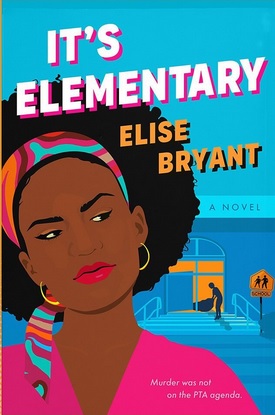
  • The Grimoire Grammar School Parent Teacher Association
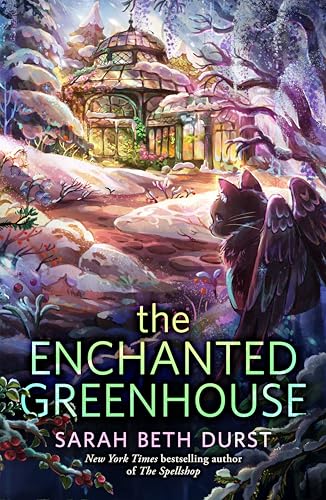
  • The Enchanted Greenhouse
  • Death on the Caldera
  • Opal Watson, Private Eye

Recently Watched

  • K-Pop Demon Hunters
  • A Nice Indian Boy

What I’m Working On

  • Novel: Drafting 53K Written / Synopsis & Proposal Complete
  • Short Story 1: Complete
  • Novella: Drafting
  • Short Story 2: On Deck


The Starseekers

Head to the 1960s for a Hidden Figures meets Indiana Jones historical fantasy. Cynthia Rhodes is a arcane engineer at NASA, who also co-hosts a magical education show with archaeologist Theo Danner. A series of strange accidents at NASA, and elsewhere, put them on the trail of a mystery that entangles them in both peril and murder most foul.

Arriving 1/6/26

Harper Voyager * Barnes & Noble * Bookshop

Amazon * Kobo

Cover Coming Soon!

Don’t forget to request at your local library!

Subscribe

Go back

Thank you for subscribing!

Fantastic! You are now subscribed to Nicole Glover’s newsletter, Writing With Starlight and will receive an email notification when a new post is published.
Warning
Warning
Warning.

Nicole Glover is a fantasy writer and the author the Murder and Magic series which includes THE IMPROVISERS. Her next book is THE STARSEEKERS, forthcoming 1/6/26

The Benefits of Going Out Into the World for Writers

The thing they don’t tell you about being a writer is that you have to *gasp* talk to people. Only a rare breed of writers can emerge out of nowhere, release a book, and vanish. For the rest of us talking about books, writing, and other topics (to mix up talking about books) is how we find readers and make a little noise about our stories

This presents a few challenges for introverted homebody writers, who need to develop a few skills sets in that matter, whether it’s attending events, going on podcasts, or chatting with strangers who managed to recognize you.

There’s a lots of advice about there about public speaking, but some of the best advice I heard boils down into two things:

  1. Have in mind 2-3 things you want people to know about your books
  2. Be willing to get out of your comfortable zone

I won’t say it’s simple, but you’re already putting yourself out there with words, why not the rest of you? Which is why I have a number of events planned this year.

Here, There, and More to Come

So far, I have a event each month and it’s been going to places I haven’t been before and meeting new people.

2025 is a year of me doing different things, some I never had before, because I wanted to start jumping into situations I would have avoided in the past.

I went to RavenCon for this first time year, and despite some hints of rain had a rather lovely time. You could tell the con had been here for a while for they had a marvelous setup. I also enjoyed they had commuter lounge that I could pop in for a breather.

Getting Outside Helps With Writing

I’ve been busy since the start of the year, always feeling I’m a rush or time crush. But the moments I had to pause have been wonderful.

Recently I made a trip to Richmond only to find that my intended plans got canceled at the last minute.

Deciding to not just turn around, I took it as an opportunity to check out a bookstore I hadn’t been to before and ended at Shelf Life Books. Where I got to browse through new and used books, and found the store’s cat very helpful!

That whole day, reminded me the benefit of taking a long moment to pause and just simple be. I have spent a lot of time these past few months fretting and planning for the future, that I forget when the future arrives to enjoy it.

Taking a pause also helped me take a step back and figure out how to tackle the short piece I’ve been working on.

Filling the Well or Let Me Gush About SINNERS

This movie is so good, it got me scrambling around trying to figure out to get to theaters, instead of waiting to hit on demand. (Which I do quite often, I’ve a VERY patient person!)

Sinners is a movie that deserves to be seen on the big screen if only to enjoy that standout moment in the juke joint. I predict it’s a moment that’ll inspire many works, it certainly has for me.

Beyond that, I really enjoyed sinking into a fully original story, that takes its time to let you know the central players you’re following. By the time the main crew is gathered into the juke, you have enough sense to care about them before things start getting exciting.

Similarly the fantasy element, the vampire(s) don’t drop in until midway into the story, which is another strength of the story. Most films these days launches you right into the action with only a token setup. You don’t get a chance to spend time to appreciate the world and the characters before everything changes. Sinners also builds suspense by using historical tensions and the opening of the film that hinted that something went horribly wrong, letting it loom over even the brightest moments.

The only weakness for me was that the twins felt interchangeable, like a copy of one person instead of two people. If they weren’t color coded, I would have never known who was who, as lot the mannerisms were the same, and the difference were too subtle to catch upon first viewing. Who knows maybe it was on purpose!


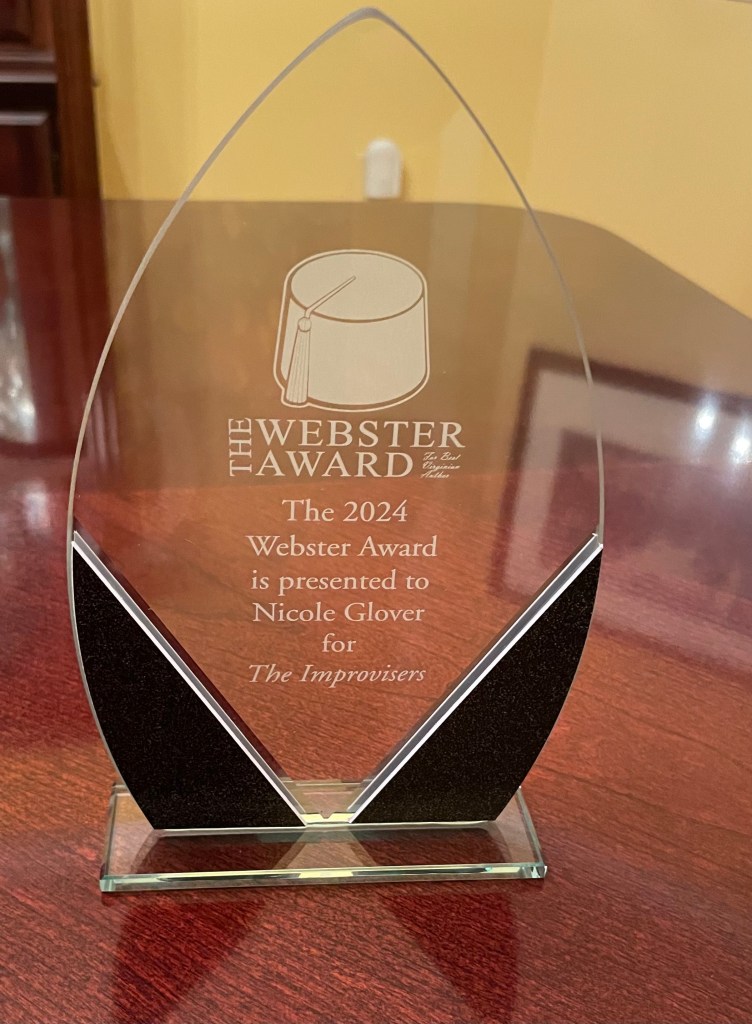
The Improvisers wins an award!

While I was at RavenCon I was awarded The Webster Award, given for outstanding writing for a SFF Viriginia Author.

I’m delighted and touched by such an honor!


Upcoming Events

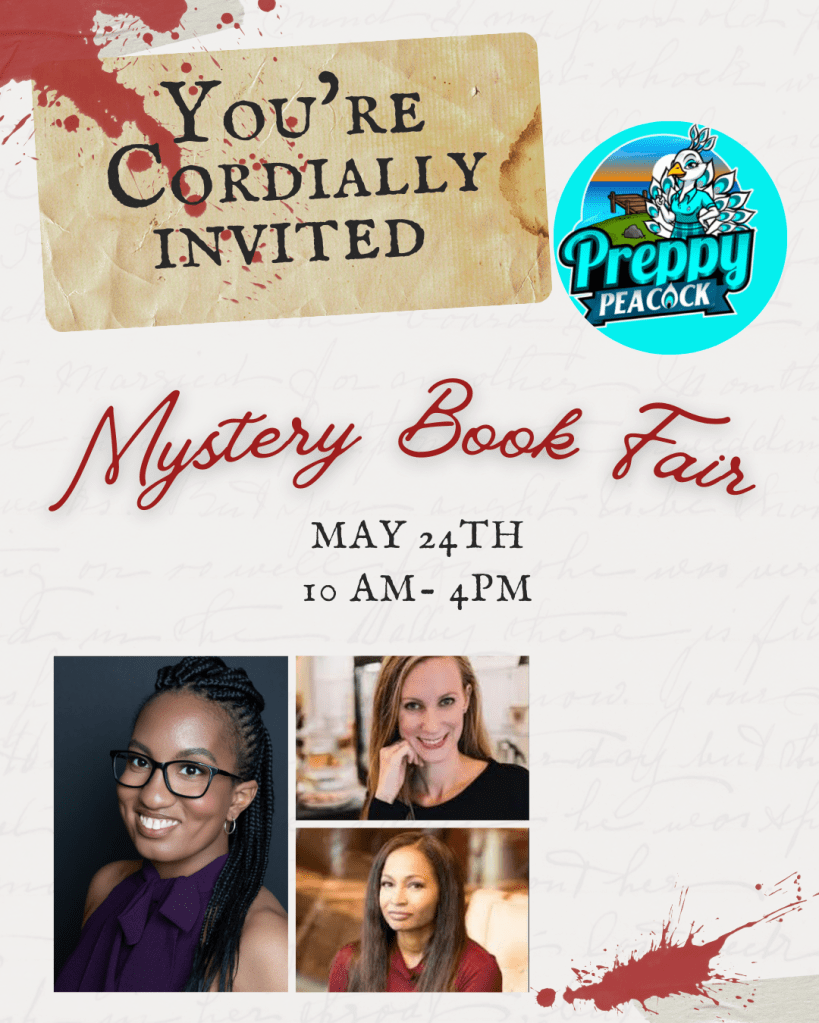
Mystery Book Fair

Preppy Peacock Bookstore in Hertford, NC

I’ll be at the Preppy Peacock Bookstore between 10 AM – 12PM on May 24th, with Esme Addison and Katherine Schellman joining in on the fun later that day.


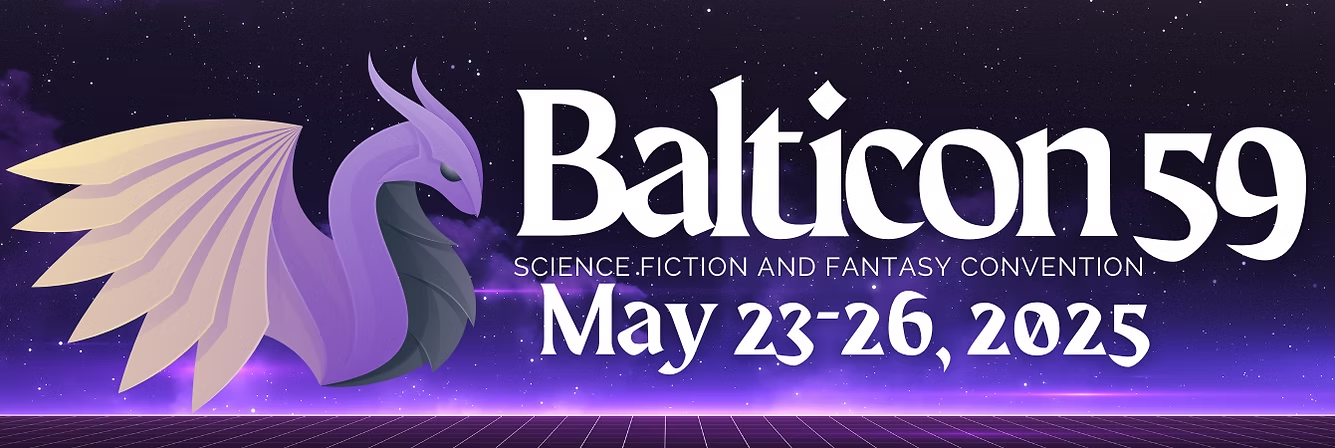
Balticon

Head out to Baltimore, MD and meet me Sunday, May 25th at Balticon!

Reading: 10 AM

Panel: Lightbulb Moments: How Authors Develop Ideas 11:30 AM

Panel: Assembling Your Cast 2:30 PM

Signing: 7 PM


Imaginarium Book Festival

If you’re in the DMV, Come find me on June 6 & 7 at The Imaginarium Book Festival!

Subscribe

Go back

Thank you for subscribing!

Fantastic! You are now subscribed to Nicole Glover’s newsletter, Writing With Starlight and will receive an email notification when a new post is published.
Warning
Warning
Warning.

Nicole Glover is a fantasy writer and the author the Murder and Magic series which includes THE IMPROVISERS. Her next book is THE STARSEEKERS, forthcoming 1/6/26