
I’ve been writing historical fantasy for some years now, and have a few thoughts on how to do it well. Historical fantasy isn’t just adding magic to the story. It’s about blending magic thoughtfully to history in a ways that transforms the story.
The following rules are mainly personal preference. They’re more guidelines I follow while working on Murder & Magic and any other historical fantasy projects.
1) Magic should be deeply woven into the story
If you change your mind and decide to make the story historical fiction, you’ve done something wrong if your only changes are deleting a few paragraphs or a chapter. Removing magical elements, should require a deep rewrite, where the story is recognizable as it once was, but uniquely different from the previous draft.
Magic in the story should be a driving factor in character arcs, minor subplots, and especially the main plot. If it’s not, the fantasy elements are just hanging around like mismatched curtains and everyone including your reader is wondering why it’s even there.
2) Know when major events happens so it won’t derail your story
When selecting your time period be very aware of when major events in history happen. If you don’t include, say the Wall Street Crash of 1929 in a story set in February 1929 even people not well-versed in history will be puzzled why you skipped such a major moment. You’ll need to have a good reason for missing the event or make it clear the book’s story stops before the event occurs. Otherwise readers will distrust anything you say about history.
On the other hand, knowing when major events in history occurs, helps you plan out your story. Whether it’s plotting it around the event or avoiding trampling over that corner of history. When setting the dates for my books I carefully selected months when I didn’t have to worry about major events that I needed to reference. Also keep in mind while it’s good to include major events, try not to force it, especially if you’re only including it because you feel like you must instead of it just being a natural flow of the story.
3) Use historical persons sparingly and with care
I don’t like including historical people as major characters, or even secondary characters, in my stories. Real people are messy and don’t always neatly slot into the places I want them to be. I rather make original characters that take inspiration from such people, especially when there is only a single element I’m interested in in the first place.
Although it is fun to sneak in cameos or references to historical people!
4) Don’t fret the small stuff, historical fiction is all about vibes
For my last book, I went searching for the etymology of a word to make sure I was using it in the context that someone in the 1930s would use it in. A simple enough task, but I kept finding so much conflicting information! Articles and examples from books at the time gave me different answers, and as I read through it all I was very close to pulling my hair out.
Then I remembered, that the word I was fretting over was such a small detail folded into many plot movements. All my word choice need to be was something that seemed historical to the modern reader. At the end of the day as long as all the elements of the story seem plausible for the time period, it will be enough for most readers. Especially when your story has dragons or witches in them.
5) Remember this isn’t a history lesson
Generally while readers love learning interesting things, they aren’t always ready for a dissertation level spiel on a niche subject. You need to find a balance between sharing historical details relevant to the plot or characters. Sometimes it is good to go into detail about Paris’s sewer system in the 1800s if a large part of the plot hinges on using the sewers. On the other hand information if it’s just plopped down in the text it will stop the plot in its tracks, and worse readers will drop off too.
I always say that for all the historical research you do, only about 10% needs to be on the page. The rest is for you as the writer to know and let it inform your story.
6) Weave in magic with care and grace
Sometimes you want to shove zombies into a 19th century setting and be done with it. But to do it right requires pairing the element of magic with the social context of the time. For example I paralleled wand laws with gun laws for my book set in the 1870s. The element of magic became stronger because I grounded it with a real piece of history. Magic doesn’t have to be tied to every element but it should feature thoughtfully into the world and story.
7) When in doubt a sprinkle of magic can help!
When you get stuck on a historical fact that’s not working in your favor, feel free to add magic to it. Doing so makes it clear it’s not realistic at all and gives you more creative freedom.
In general, it’s also good to keep in mind at the end of the day it’s a fantasy story. 100% accuracy isn’t a promise when dragons roam the skies. As long as you get the major details right, readers will let themselves be swept up in your fancies!
Upcoming Events


World Con Seattle – 8/15 -8/17
NASA’s Unsung Heroes – Fri. 1:30pm
Signing – Fri. 6pm
Table Talk – Sat 10:30am
Writing as an Act of Resistance Sun. 10:30am
Libraries: Magical and Radical Sun. 1:30 pm
Personal Updates

Recently Watched
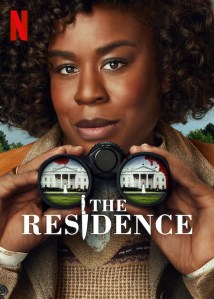
If there’s ever a show that was made for me in mind, The Residence is it! It’s like someone rummaged around in my mind and plucked out some (okay, all) of my favorite things.
A quirky murder mystery, birds and birding, fun twists and turns, a stellar cast clearly having fun, clever editing, great visuals, and storytelling that gives us the most pressing answers but trusts viewers enough to fill the in blanks.
It was on my radar because I first heard about because the late, great Andre Braugher was set to star originally. I was iffy about a show being set in the White House, but luckily the show’s quirky world reminded me more of a Wes Anderson film with a touch of Pushing Daisies. The only pity is that it looks like we won’t get more stories in the world, but luckily the show works well as a mini-series with everything you wanted answered by the end.

Writing Updates
Novel: Drafting, 56K Written
Short Story 2: First Draft Complete, 3K
Short Story 3: First Draft Complete, 2K
Novella: 3K written
Secret Project: On Deck
The Starseekers
Head to the 1960s for a Hidden Figures meets Indiana Jones historical fantasy. Cynthia Rhodes is a arcane engineer at NASA, who also co-hosts a magical education show with archaeologist Theo Danner. A series of strange accidents at NASA and elsewhere, put them on the trail of a mystery that entangles them in both peril and murder most foul.
Arriving 1/6/26

Don’t forget to request at your local library!
Subscribe
Thank you for subscribing!
Nicole Glover is a fantasy writer and the author the Murder and Magic series which includes THE IMPROVISERS. Her next book is THE STARSEEKERS, forthcoming 1/6/26
 Nicole Glover