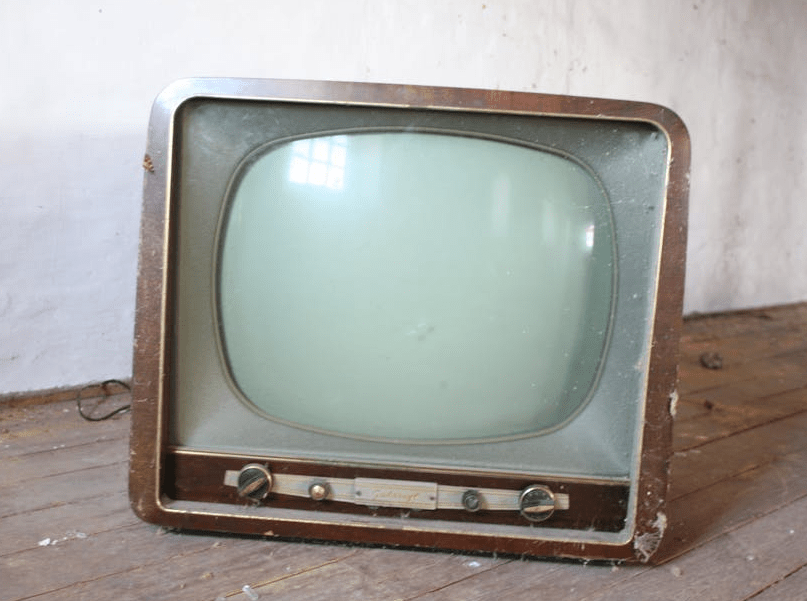
I grew up watching a great deal of educational television, and to this day many of the songs, catchphrases, or segments still lurk in my memory only to emerge at the most unexpected moments. We absorb a lot of knowledge from media, and knowing this educational media uses the format to impact numerous lessons to young children in both overt and more subtle ways. The impacts of educational television is quite interesting, but it’s also revolutionary, because some of the biggest names, like Sesame Street and Mr. Rogers were created in response to the seismic social change of 1960s A legacy that continues in the shows that follows like Gullah Gullah Island, Blue’s Clues, and especially Ms. Rachel.
My next novel, The Starseekers, contains a minor subplot involving an educational show, or in this case an educational show that teaches spells to its young viewers. In the book, the main character Cynthia and her love interest, Theo, are brought together to co-host the show. While they both will admit they only did the show to spend time with the other, educating young minds about magical concepts was also just as appealing for them as they aspire to share knowledge.
How this subplot even ended up in the book first place, involves Sesame Street’s 50th Anniversary celebrations. During that time I came across an article about the “The Unmistakable Black Roots of Sesame Street” as well as others mentions about about Chester Pierce, a Black psychologist who worked on the show. Pierce saw the show as a means to counteract negative stereotypes and provide positive messaging to its young viewers. Sesame Street when it began in 1969 was the most diverse cast on television and from the start put Black and Hispanic characters in leading roles. Creator, Joan Cooney Ganz a television executive who worked once worked with Head Start, strongly felt that Black children who lived in cities should be the core audience (hence the urban setting for the show), thus making Sesame Street today welcoming to all from the very beginning. Beyond just the main cast and setting, numerous Black celebrities, such as James Earl Jones, Mahalia Jackson, Jackie Robinson, and Shirley Chisholm, all dropped by in that first revolutionary season.
Sesame Street was not the first educational show, in my research I found that throughout the 1950s and 1960s there were several shows trying to get children to learn their ABCs, but they lacked a certain spark. These early shows replicated classroom sets, or leaned too much on the entertainment value, and most crucially presented weren’t that diverse. With Sesame Street there was of course the puppets to make it stand out, but there was the sensibilities it took from advertising. Those short segments the show is famous for, contrasts different visual styles, (puppets, humans, cartoons, etc) to keep children’s attention – and to bring it back when lost! The show had several educators, child care providers, and psychologists working on it, including co-creator, Lloyd Morrisett a children’s psychologist. There were even creatives involved, most famously Jim Henson, but also illustrator Maurice Sendak. The educational principles drawn during the earliest workshops for the show, as seen in Children and Television by Gerald Lesser, guided how the show portrayed anything from letters to the social environment and become the foundation for other shows that followed.
Sesame Street has outlasted its contemporaries and its competition that followed, evolved with the times, addressed sensitive topics with care, and dealt with the loss of funding – but endures despite everything.
All of this is why educational television ended up as a subplot in The Starseekers. Sesame Street, PBS, and other educational efforts rose out of radical change and social upheaval. Educational television reaches all and is for all. Which makes it magical.
And magic is hard to get rid of no matter how much you try.
Upcoming Events


World Con Seattle – 8/15 -8/17
NASA’s Unsung Heroes – Fri. 1:30pm
Autographing – Fri. 6pm
Table Talk – Sat 10:30am
Writing as an Act of Resistance Sun. 10:30am
Libraries: Magical and Radical Sun. 1:30 pm
Personal Updates

What’s On My Nightstand
- The Convenience Store by the Sea
- The Grimoire Grammar School Parent Teacher Association
- The Enchanted Greenhouse
- Death on the Caldera
- Opal Watson, Private Eye

Recently Watched
- K-Pop Demon Hunters
- A Nice Indian Boy

What I’m Working On
- Novel: Drafting 53K Written / Synopsis & Proposal Complete
- Short Story 1: Complete
- Novella: Drafting
- Short Story 2: On Deck
The Starseekers
Head to the 1960s for a Hidden Figures meets Indiana Jones historical fantasy. Cynthia Rhodes is a arcane engineer at NASA, who also co-hosts a magical education show with archaeologist Theo Danner. A series of strange accidents at NASA, and elsewhere, put them on the trail of a mystery that entangles them in both peril and murder most foul.
Arriving 1/6/26

Don’t forget to request at your local library!
Subscribe
Thank you for subscribing!
Nicole Glover is a fantasy writer and the author the Murder and Magic series which includes THE IMPROVISERS. Her next book is THE STARSEEKERS, forthcoming 1/6/26
 Nicole Glover